Malaysian comedian Harith Iskander on Asian parenting style vs. 'Ang Mo' parenting style from Youtube
I'm sure as a Malaysian, you are probably laughing at his joke right now. Maybe if you are a Singaporean or any other Asian too. However, if you're a North American or Australian for example, that joke told by this famous Malaysian comedian, Harith Iskander will probably not tickle your funny bone as much. Maybe some of you might find it offensive. One person actually commented on the video on how she felt offended by the material. Now why is that?
In this post, I want to 'very gently' touch on the subject of humor which is inspired by a recent controversy about a certain individual/individuals in Malaysia or what happened during the 2022 Oscars ceremony. I won't speak too much about my own opinions but I would rather prefer to remain neutral about it. Often, I love to ask this question: 'Why'?'. Why do we laugh? Why do we laugh at certain things and why do we get offended by a "joke"? Why do we laugh when our friend falls in a "funny" way? Why do we laugh during a tense situation? Why do babies laugh at absolutely ridiculous things? Why do adults laugh less than children? These are all interesting questions to ponder when you're siting on the toilet (loo) looking at your bathroom tiles and imagining weird faces in the floral design. You probably laughed a bit at that or maybe not.
I always remember this saying, "Laughter is the best medicine!" (most probably from a column in the Reader's Digest). It is true. Studies have shown that laughter actually stimulates the heart, muscles and enhances oxygen-rich air intake. It also increases endorphin levels which is a type of hormone the body releases to cope with painful or stressful situations. They are produced and stored in a part of the brain called the pituitary gland. They are commonly called "happy hormones" or "feel-good hormones". They aid in soothing tension, stimulating blood circulation and muscle relaxation. In the long run, laughter might even help improve the immune system, overall mood, satisfaction towards relationships and life, also relieve pain from illnesses. I guess that's just general knowledge. You wouldn't have to read about it. You will feel it after a good 'bring-you-to-tears-hearty-from-inside-your-bones' laugh. But what exactly makes us laugh?
Funny Bone
Babies begin laughing before they can even speak. In an article by Lauren Schenkman (2019), she introduces the reader to a British researcher and lecturer in developmental psychology at Goldsmiths, University of London named Caspar Addyman, who found that most babies will laugh at one simple thing: a game of "peekaboo". He sent out questionnaires to parents across the world and from the month of September 2012 until November 2013, about 1,500 parents from 62 countries responded to his questions such as: When was their babies first laugh? What kind of situations do their babies find funniest? What kind of toys and games made them laugh the most? Some parents even responded with short videos of their babies laughing (how cute!). Most of the babies started laughing at the age of three months. And interestingly, the game that was most popular in making those babies (3 mo-2 yrs) laugh were not fancy toys but indeed "peekaboo"! Addyman theorized that, maybe this is how babies communicate with others and this is due to evolution. The same way a baby cries for the attention of a parent, the baby might laugh to communicate and feel a sense of belonging among the family members or community. Basically, babies laugh to feel a 'connection' with the parent or with someone they are familiar to. Addyman explains that it is just 'pure social connection', eye contact and touch. He also thinks that an idea put forth by a Oxford University anthropologist and primatologist Robin Dunbar rings a certain truth. Dunbar suggested that laughter might be a replacement for grooming which is a primate behavior that creates trust and a sense of community among the group members. Isn't that fascinating?
Now you must be wondering, how do babies actually develop this sense of humor? Why would they laugh when someone hides their face behind their palms and then reveals their face again surprisingly? The simple recipe: sugar, spice, and everything nice! Just joking. It's socialization, imagination, perspective and deception, according to University of Huddersfield psychology lecturer Paige Davis (2017). With the development of all these components, babies or children are able to develop their own sense of humor which first begins with physical humor. Later on, as they develop their capacity for language, they will slowly begin to understand verbal humor such as jokes or sarcasm. As mentioned, babies develop a sense of belonging through humor as early as the age of 3 months. They want to feel included and demand attention from their caregiver. This is a survival skill because without this, they will definitely not survive on their own. So babies communicate mainly through sound and body language. As soon as babies develop the capacity to engage in eye-contact, they will begin to understand that they are sharing an experience with their caregiver or another person and they do this by crying, laughing, smiling, and frowning. We probably think it is due to the baby's innate ability to imitate which is a theory proposed by an American psychologist Andy Meltzoff and his colleagues. However, more studies (including this one, "Comprehensive Longitudinal Study Challenges the Existence of Neonatal Imitation in Humans") found that imitation is not an innate behavior but it is a learned one. Babies learn to imitate by observing others imitating them.
Another component required to develop humor is imagination which is more evident in older children as they begin to socialize more and communicate through language. A big part of that is through play. Children start to creatively place themselves in "imaginary" situations and act out roles such as being pirate, a princess or, a stunt-person. They will also use things around them such as their toys or clothes to joke and to pull pranks, and this is all learned behavior from their caregivers. Finally, perspective and deception is also important in developing a sense of humor. This happens when children begin to understand how the mind works. Seems like a complex thing to understand, no? But interestingly, through social interaction children learn how others respond and think about a certain situation, and they know that the response or state of mind may be different from theirs. This is how deception is employed which is the ability to understand that others may be fooled into having false beliefs. For example, a child may sneak up on someone and scare them at the last minute or through the game of hide-and-seek. The child understands that by hiding, the parent/caregiver is unable to see them, thus they are fooled or deceived.
Now let's look at how humor serves as tool for education and learning. As you can see, babies or children develop many cognitive skills through social interaction which involves laughter and play. That is why, pre-school and kindergarten classrooms are always filled with children's laughter (mostly because they don't have to pay taxes). For older children or young adults, the usage of humor in the classroom may also have an effect on behavioral and cognitive engagement during learning. A 2019 study conducted by Erdoğdu and Çakıroğlu on 74 programming students (37 control, 37 experimental) found that various humorous elements incorporated into online learning actually improved behavioral engagement for course materials, discussions, and assignments but it did not contribute to the behavioral engagement for quizzes in the experimental group. The researchers also observed that there was significant improvement in emotional and cognitive engagement with the use of humor in the online classroom. This is also quite similar with how music, rhymes, and songs are used to stimulate memory and learning. Shows like Sesame Street, Dora the Explorer, Upin and Ipin are prime examples (including many Pixar, Disney, Nickelodeon shows) of how humor, together with music is used to get children laughing, thus retaining their attention when educational material, moral values or subjects are shown.
Some researchers have said that adults laugh less than children or babies. And I think that is very subjective. As we grow older, the interactions and relationships between ourselves with others change and this effects the way we use humor in our daily lives. Adults usually use humor among their peers, in the workplace, at home or during other social situations. So depending on the number of relationships, roles and social interactions that adult individual has during the day, it is hard to compare adults with babies which spend most of their waking hours playing and interacting with the caregiver. In adults, humor serves different and more complex functions but it basically also brings a community together through shared experiences. It diffuses tension in a situation such as in the workplace, school, and family gathering. It also helps someone to overcome a life burden or heartache and cushions the impact of negative circumstances. Overall, it still serves as a tool to unite people by sharing an experience with people from the same or different community.
Knock, Knock! Who's There?
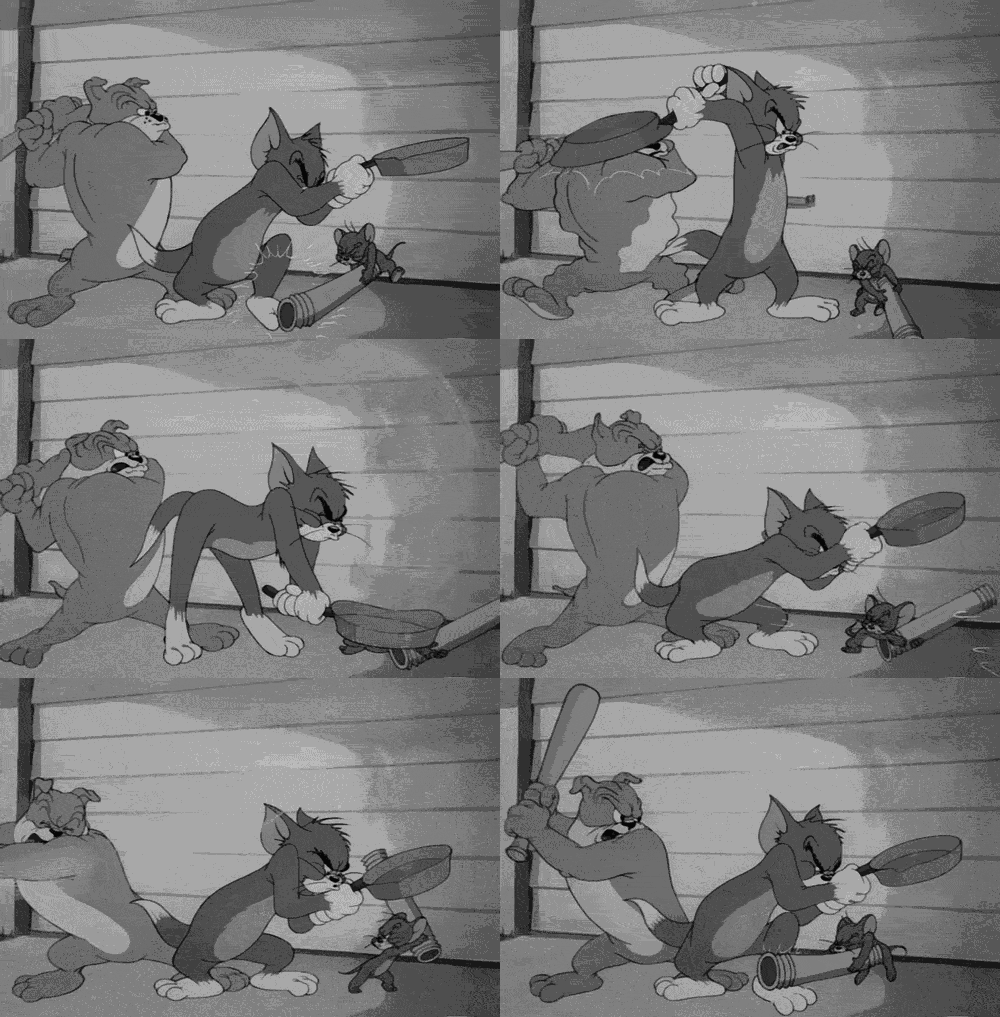
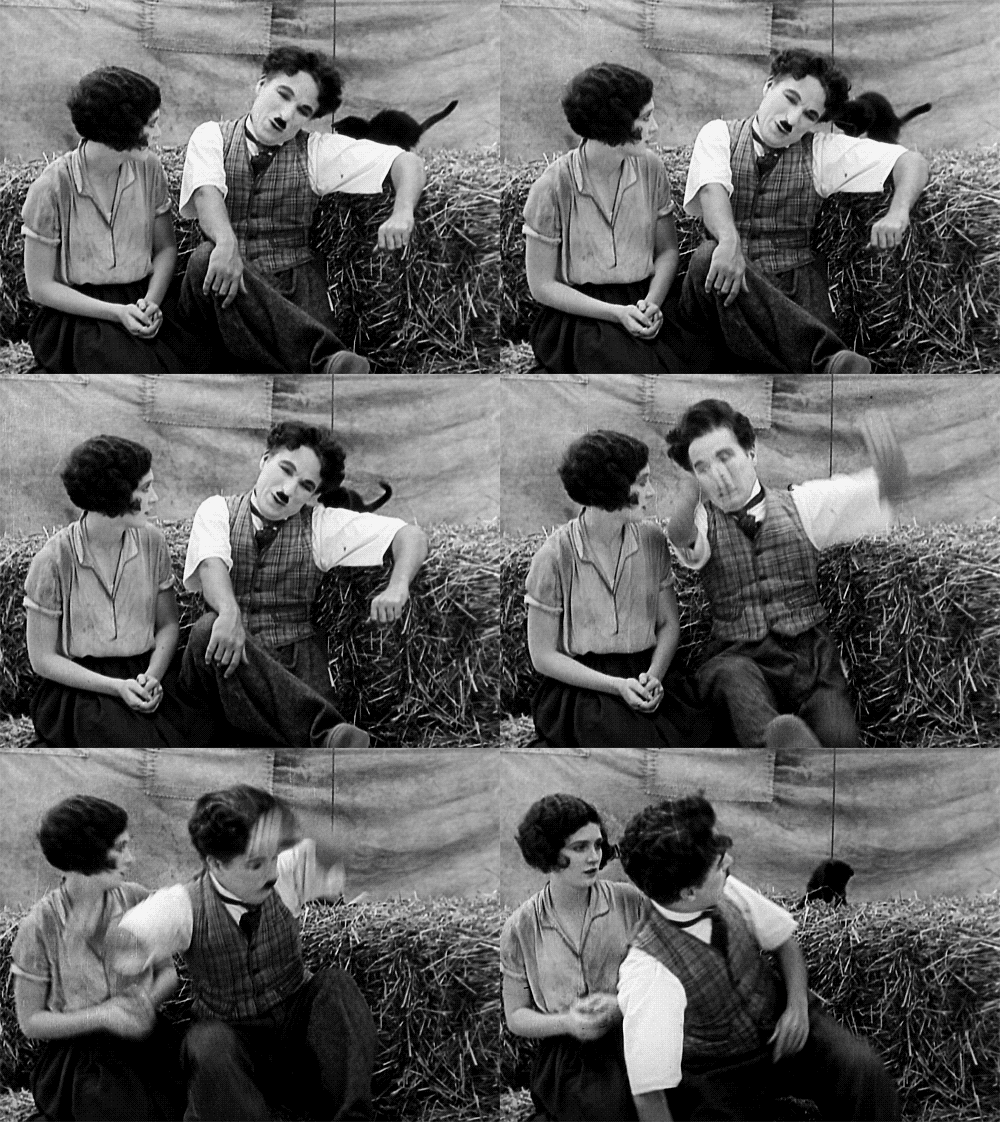
Humor is communicated through verbal and non-verbal expression. It is spoken, written, involves gestures, body language, and facial expression. This is evident in the comedies we see in current times and even in the past. The term 'comedy' seemed to originate from Ancient Greece which has its roots in political satire (you can Google it, I don't think I'm knowledgeable enough in comedy to give a history lesson here). Comedy was often used in theater or musicals like the pantomime and in Asia as well through Xiangsheng performances. Malay actors like the legendary late P. Ramlee, Hamid Gurkha, and Abdul Aziz bin Sattar have also graced televisions with their comedic stunts and witty humor. Similarly, the use of puppets were a common form of entertainment for children in the past which uses humor and physical comedy as well. Slapstick comedians were more popular in the past when film did not have sound such as the infamous Charlie Chaplin. Anyhow, I remember watching Mr. Bean when I was a kid as they often replayed the series many times on television. As you know, his comedy was more physical as the character Mr. Bean did not talk much and often mumbles or make sounds. Most of us 90s kids were fairly surprised when we watched interviews of Rowan Atkinson speaking perfect British English when all we knew that he was just a mute person! A lot of local (Malaysia and Singapore) comedies/sitcoms and comedians also employ physical comedy besides verbal humor in their sketches such as those seen in Maharaja Lawak Mega, Pua Chu Kang, Spanar Jaya, Pi Mai Pi Mai Tang Tu, or Under One Roof. Slapstick humor is still among one of the popular forms of comedy performances. The form of comedy and how it is conveyed is obviously depending on the type of performance or media used, whether it is in theater (in person), television, radio, or print which brings us to the next section on the types/styles of humor.
Your Cup of Com(a-Tea) *I couldn't spell it correctly because it might read wrong LOL*
There are different styles of humor and how we appreciate them may be due to how we were raised as a child, especially based on how our primary caregivers have taught us. Imagine a child who has never played hide-and-seek or enjoyed any forms of laughter, you would think they would give you a blank face when you try to play or joke with them the first time. The main reason is, they have not been taught how to react to these games or situations. This is the same for any type of humor style, if an individual has not been exposed to a certain type of humor in the past, that person wouldn't know how to react or it will just go over their heads.
Comedians often employ certain types of humor in their performances, or sometimes a mix depending on the situation and the image that they are trying to portray to their audience. Although there are different styles of humor, a single comedy skit or sketch may contain more than one style. Different styles may be portrayed by different characters to form a cohesive story based on the relationships between each character and how they interact with one another. This is quite obvious in most TV sitcoms, where you have that one "airhead" or "dumb" character, the "charmer", the "wisecracker", the "straight" or "square" character, and the "goofball". These are called "archetypes" which have been historically employed by the famous 16th-18th century 'Commedia dell'arte', a form of professional theater originating from Italy, also known as Italian comedy. Heard of Harley Quinn? Joker's lover? The name Harley Quinn was actually taken from the name Harlequin which is one of the characters in the 'commedia dell'arte'. Similar to the original Harlequin character, Harley Quinn is depicted as a person wearing colorful clothing, known as a trickster with a mischievous personality. There are many other characters in the performance such as Pierrot, Tartaglia, Pulcinella among others.
Now I would like to share with you the different styles of humor through gifs and short YouTube videos (Don't worry the images and videos I've chosen do not contain controversial material at all, but if you feel that you are easily offended then I advise you to skip this part):
a) Affiliative/observational - form of humor to create a sense of fellowship based on relatable observations
Malaysian comedian Dr. Jason Leong on 'Power Rangers' from YouTube
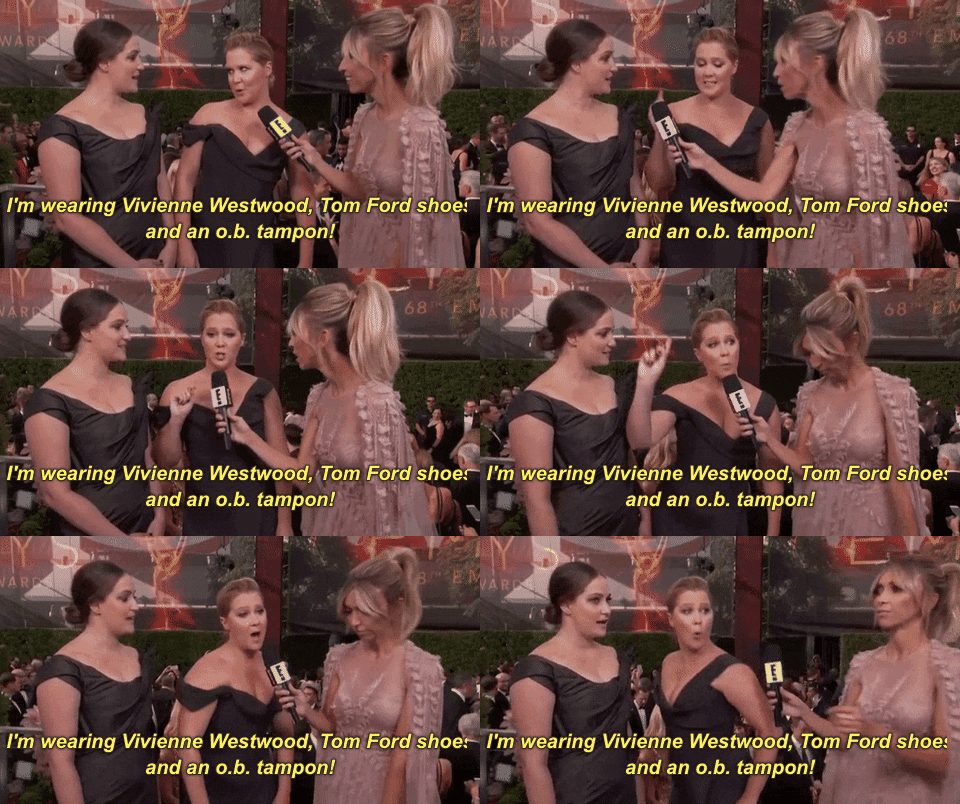
b) Self-enhancing - making yourself the target of the humor in a positive manner
American stand-up comedian and actress, Amy Schumer on her red-carpet look from GIPHY
American comedian Mike Goodwin on his cardigan from YouTube
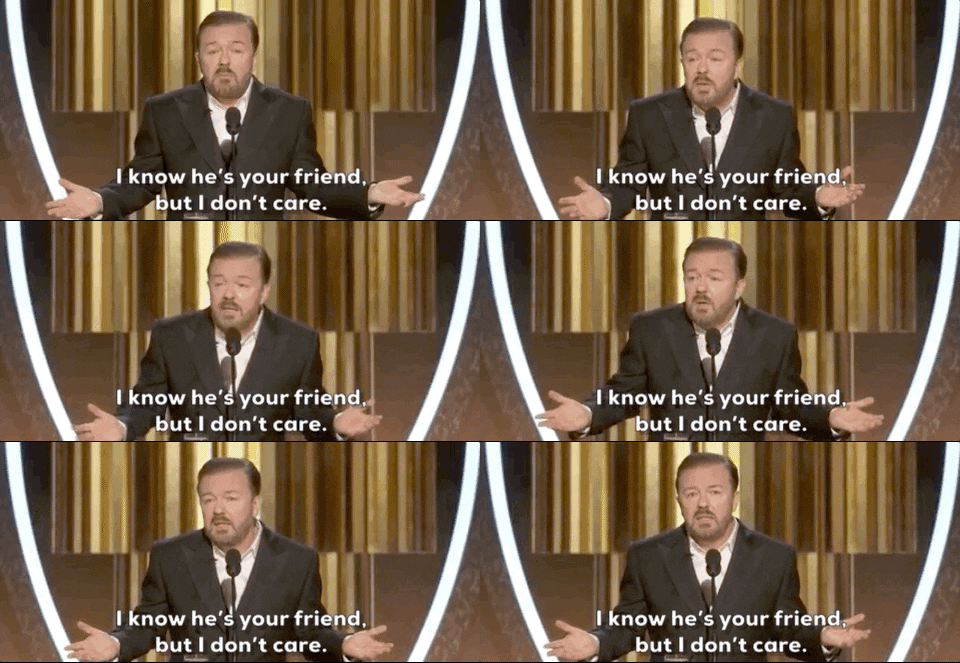
f) Dark humor - humor involving heavy, morbid or taboo subjects like death, war, or social issues
Trailer of Korean award winning film 'Parasite' from YouTube
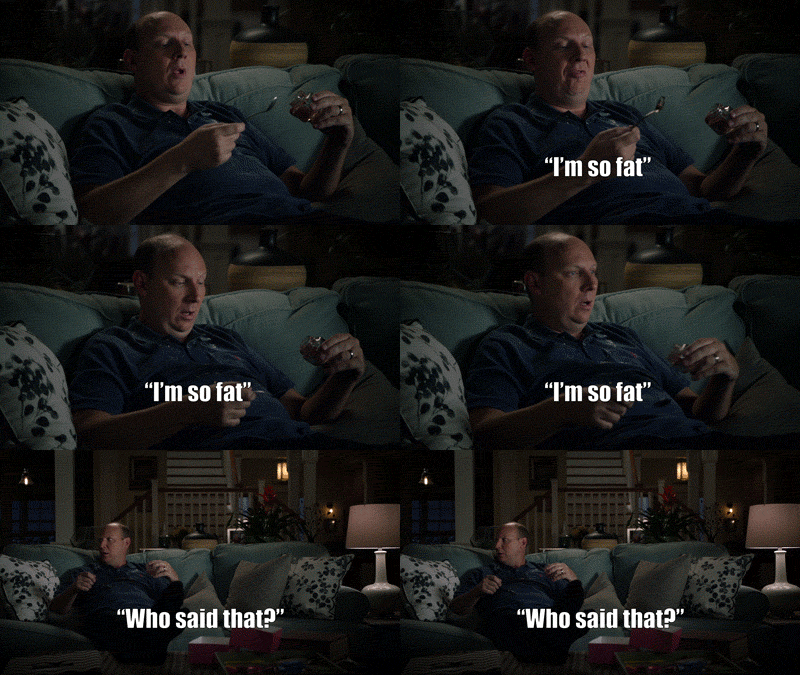
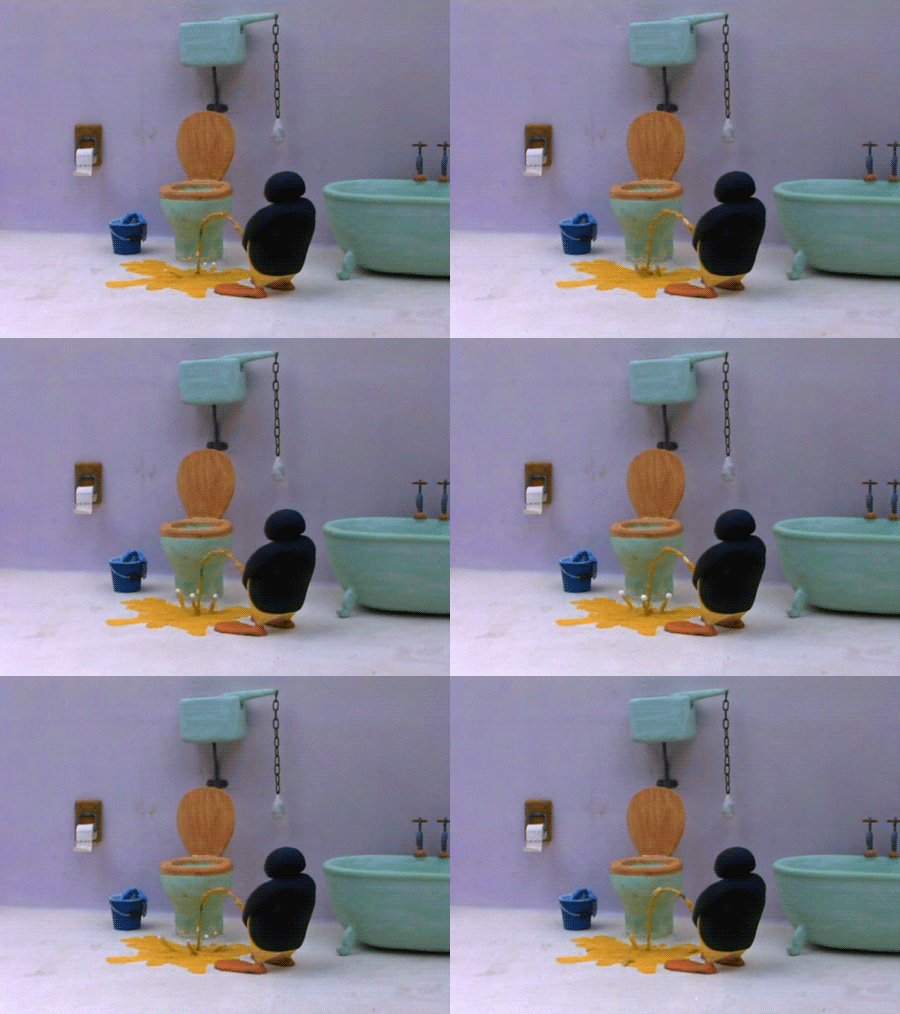
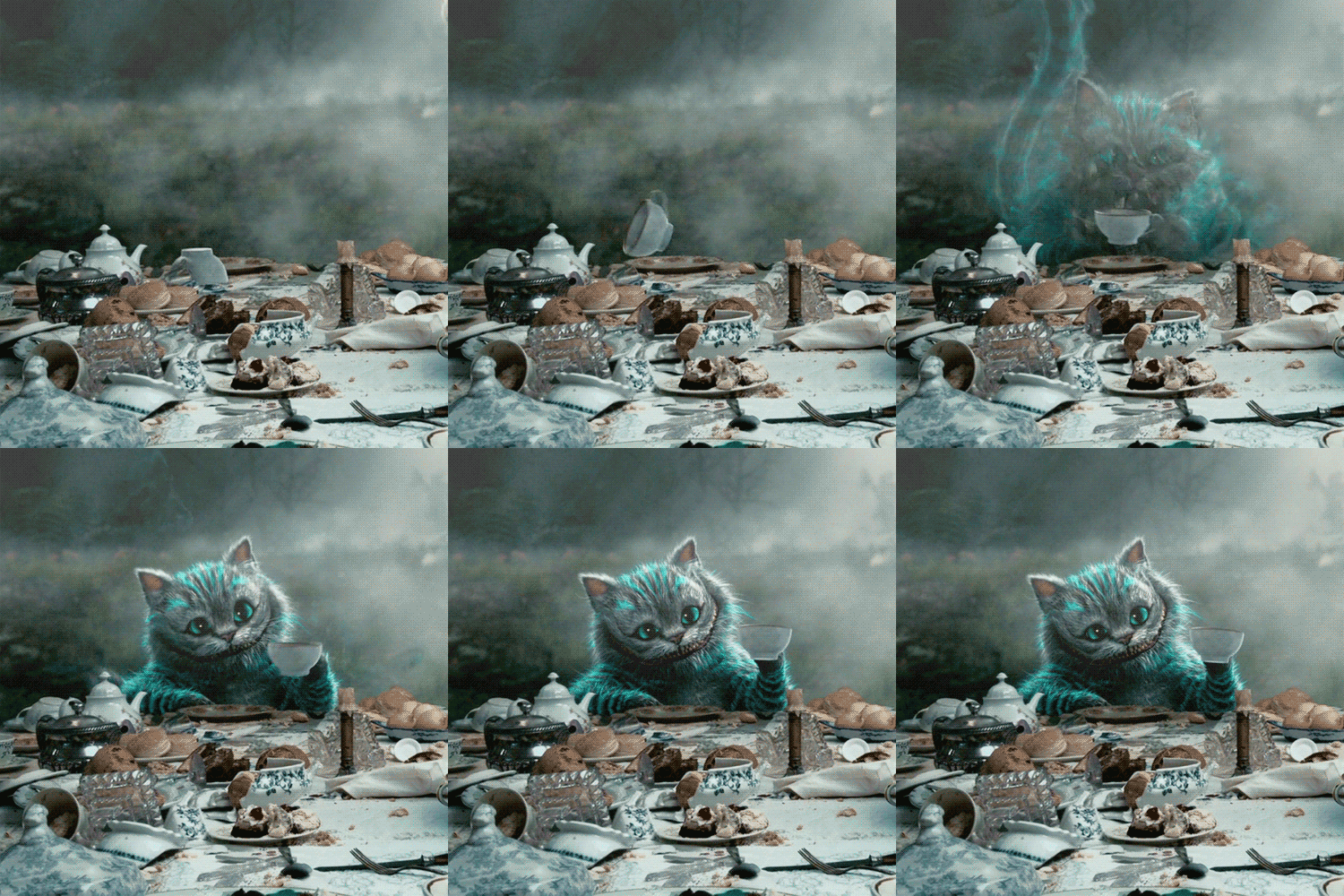
g) Surreal - absurdist comedy which depicts illogical events and behaviors or characters (more commonly found in books, literature, animation, films with CGI)
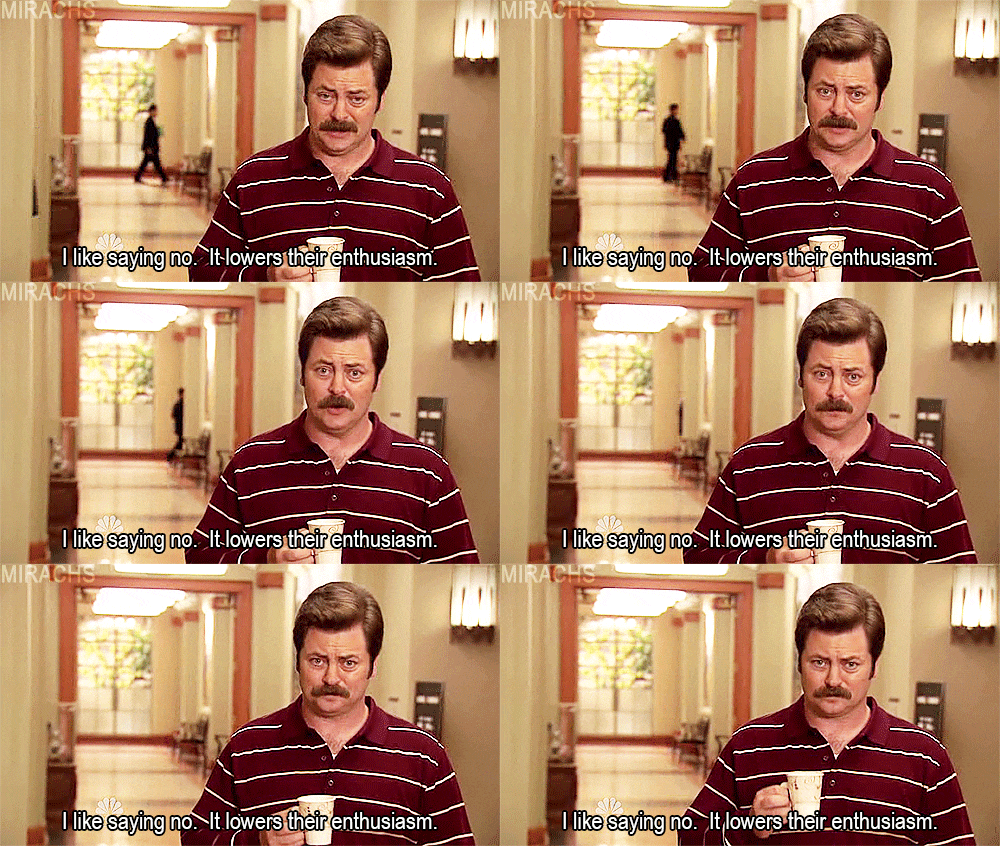
i) Dry humor/deadpan - form of comedy in which something funny is said or done by a person, while not exhibiting a change in emotion or facial expression
Ron Swanson character on 'Parks and Recreation' American sitcom from GIPHY
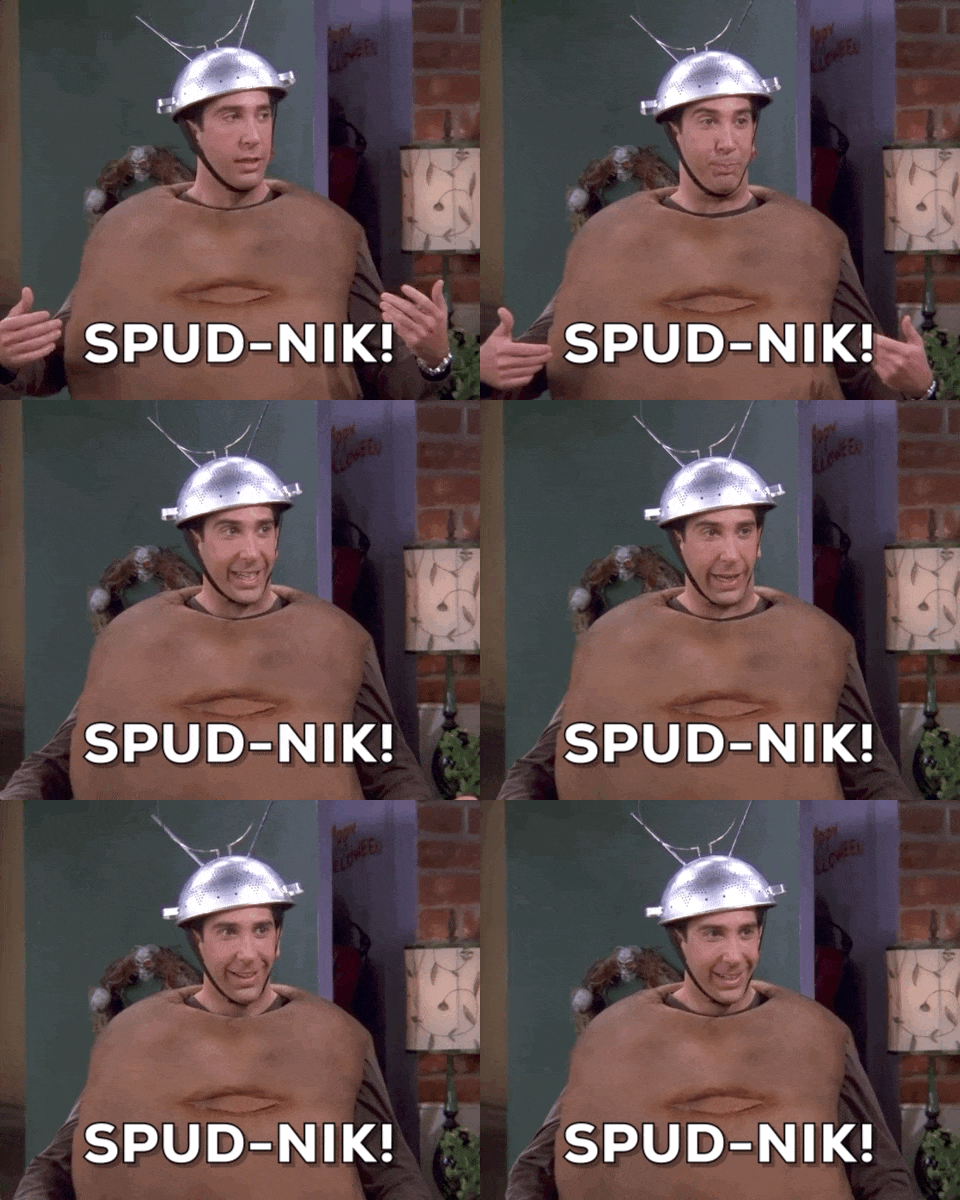
j) Word play/puns - words are used in a witty way for amusement or comedic effect
Ross Geller on American sitcom 'Friends' from GIPHY
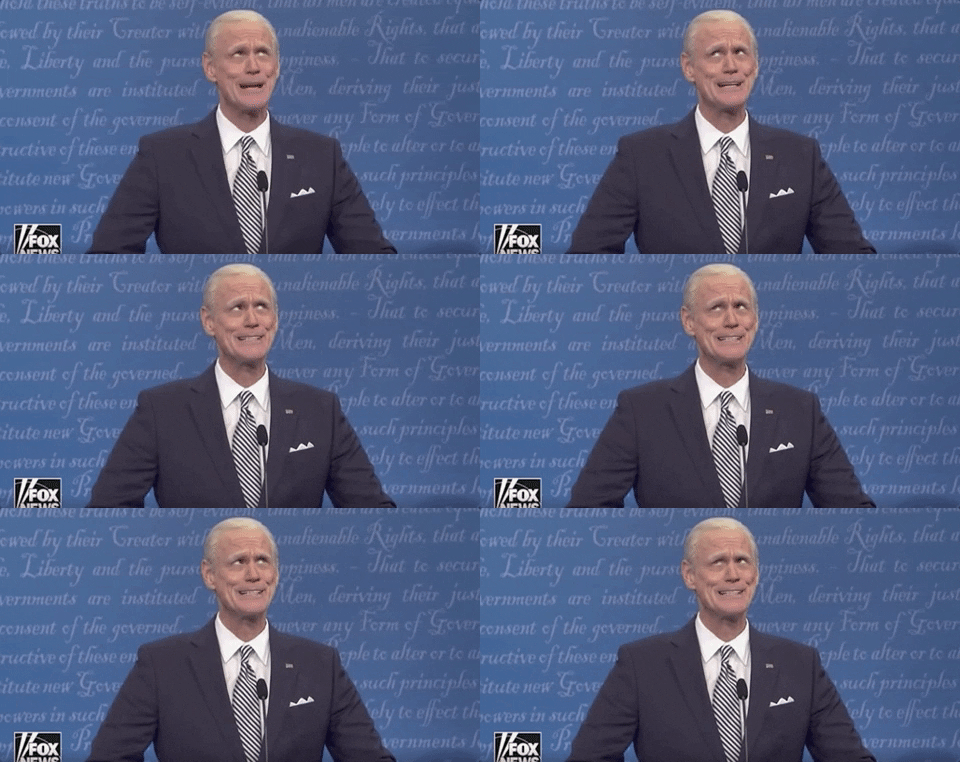
k) Satirical humor/parody - although two different forms but usually employed together. Satire is a form of humor usually used to expose or criticize someone's behavior, while parody is a form of imitation of someone's behavior for comedy
Jim Carrey parodying current U.S. President Joe Biden from GIPHY
Parody of former U.S. presidents Obama and Trump on 'The Tonight Show starring Jimmy Fallon' from YouTube
You can check out many other stand-up comedians or actors like Russell Peters, Ali Wong, Chris Rock, Trevor Noah, Sarah Silverman, Hasan Minhaj or talk-show hosts like Ellen DeGeneres, Jimmy Kimmel, James Corden to name a few. Not forgetting Malaysian comedians like Harith Iskander, Ronny Chieng, Kavin Jayaram, Filzah Awok, Douglas Lim, and Johan Raja Lawak. Singaporean comedians such as Fakkah Fuzz, Kumar, and Sharul Channa are worth the watch as well. You can see the different styles of comedy or humor used in their performances. But why do audiences appreciate certain kinds of comedy? What are the elements that causes someone to appreciate puns, but not so much dark humor?
According to theories mentioned in a review by Warren, Barsky and McGraw (2021), there are 5 main antecedents of humor appreciation (the ability to laugh at a certain joke, or simply to 'get the joke') which are: surprise, simultaneity, superiority, violation appraisal, and benign appraisal. You and I must be thinking, "Ah these psychologists! Too free!". I'll just K.I.S.S. (at this point, I've made humor/jokes so serious even I'm not laughing, but now you see how much time is spent by comedians/sitcom writers on preparing their material, not easy).
Surprise - when what you see or hear is something entirely different from what you expect, a diverge from expectations. Example: Imagine a conversation between a patient and a doctor in the examination room. Patient says, "Doctor, it hurts when I do this". Doctor says, "then don't do that".
Simultaneity - holding contrasting perceptions or two interpretations, or ideas at the same time which are possible but incompatible. Example: “Did you hear about the guy whose left side was cut off? He’s all right now.” He probably recovered. Or only his right side remains (Martin & Ford, 2018).
Superiority - basically feeling like you're not as stupid or clumsy as someone telling the joke or sharing a humorous story. Example: Sofia Vergara describing the movie "Bottom of the 9th" to talk-show host Stephen Colbert as she checks her palm for the word "redemption".
Sophia Vergara's interview with Stephen Colbert from YouTube
Violation appraisal - appreciatethreat towards norms (linguistic, logic), a person's identity, social status or even physical threats. Example: like a "punny" birthday card.
Benign appraisal - when we perceive a situation or something as not harmful to ourselves (which may include all/or some of these conditions: psychological distance, low commitment, misattribution, resolution). Example:
TikTok compilation from YouTube channel: Maranade (2021)
Psychologists say, you probably need to possess some/if not all of these elements before you can appreciate a certain kind of humor.
So what about gender differences?
Women from Humorless Venus, Men from Comical Mars
Message 10 of your friends right now and ask them to tell you which of their parents/guardians/family members/father figure/mother figure are funnier. I guess most of them will tell you their father/male guardian/male family member is funnier than say, their mother or any female member of their family. Interesting, isn't it? The "fun dad" and "nagging mom" is such a popular belief, although most times its not exactly so. Many studies have found that on average men were indeed funnier than women. But is it true? There are many funny women. Many comedians who are women. Yet, so many people think that men are funnier. I had someone (a guy) tell me before, "I prefer watching male comedians because I just don't find female comedians funny at all!". Maybe that's a bias statement. But to be honest, even I do appreciate more male than female comedians. I think for me it is about the content/material and not about the gender. I don't appreciate all male comedians, only some purely based on their content and what makes me laugh. Anyway, think about the girls and women in your lives, your mom, your sister, your aunt, your cousin sister, niece and how many of them love to crack up jokes. According to Greengross (2019), it may be due to societal norms or evolutionary forces. Are women being discouraged to make jokes? Is it not funny when a woman makes fun of herself or others? Or maybe men are more encouraged to be funny because they think women prefer men with a sense of humor? Or maybe men just like women laughing at them? However, humor in women is not exactly a high priority for some men when searching for a partner. Maybe this belief is another prevalent stereotype which deserves to be put to rest. RIP.
We know that humor is present in all cultures, in different countries, and throughout different generations. It is a universal thing. If you watch performances of certain stand-up comedians, some of them can pull in crowds of audiences from different ages, ethnicities, and cultures. That's how you are able to see humor and laughter unite people the same way sports does. However, it goes without saying that there are still cultural differences in how humor is used, perceived, and how it is appreciated. Since humor is a form of communication where it is a shared experience between the one telling the joke and the one listening to it, language and perspective is the key components of that exchange (as mentioned previously in the part about babies). Culture does shape one's identity, perspective on life and others, norms, values, morality, and the list goes on. So, what may seem extremely funny to one person, may not be or be less so to a person of a different culture.
The main two distinct types of cultures which are the collectivistic and the individualistic cultures have different ways of using styles of humor. A survey conducted by Kazarian and Martin (2004) found that people from horizontal collectivist cultures which focus more on harmony and cohesion are more likely to employ affiliative humor. People from vertical collectivist cultures which value self-sacrifice for the betterment of a group are more likely to employ self-defeating humor. On the other hand, people from vertical individualistic cultures which encourage competitiveness are more likely to use aggressive humor to enhance their hierarchical status. However, affiliative humor was used equally among various cultural orientations as it involves bringing cohesion into a group and feeling of belonging. However, surveys may not give an accurate representation of a whole population. Maybe we can observe and judge for ourselves on this theory. From what I see, it is quite accurate because a lot of stand-up shows in Malaysia tend to lean towards affiliative humor and very much less towards self-enhancing humor or aggressive humor. This is more evident when you think about the recent issue regarding the performer in the KL comedy club. When you look at it objectively, what kind of "humor" (if it even was) was she trying to use at that time? Was it aggressive humor? Was it self-enhancing? What kind of response do you think she was trying to get from her audience besides shock and anger? Simply, it was viewed as unacceptable in our Malaysian culture. If you think about it, maybe her "performance" would have received a different response in another culture. Another form of comedy which is satire is also not very well received in certain cultures due to that fact that freedom of speech is still controlled. As you can see from the videos above where the American comedians are making fun of two former presidents of the United States, you may not be able to see that in countries like North Korea, Russia and even Thailand. Why? It is simply just wrong and against the law.
That Hurts!
All of us have experienced before an exchange or engagement with another person and felt that it [the exchange] is not funny anymore. It was probably something that person said "jokingly" but we took it as an insult or a challenge. And we all remember that one person we know who is what we call the "Class Clown" - constantly making "jokes" (some tasteless) and pulling pranks at others expense. In school, the "Class Clown" probably may disrupt the classroom. Teachers may probably label them as "attention-seekers" and consider that as a disciplinary problem. But it may be deeper than that. We can try to understand why people behave as they do. Why do certain people insult others and consider that as joke? Why do certain students make loud and absurd comments in the classroom which gets others laughing, but the teacher is probably not amused? It's most probably a reflection of their mental state, upbringing, environment, personality, among many other factors. I will not go into that. However, from that example you can see how "humor" can be considered disruptive, a form of protest (you must be thinking of political satire, but satire is not usually used to influence political change) and a form of challenge to those in "power".
So now we kind of understand the background on humor, I want to bring us back to the video at the start of this post of a stand-up comedian and why some people just don't find certain jokes funny. We know now that it may be due to cultural differences, individual upbringing, or socialization. It's obvious that there is a very fine line between humor and insult/disrespect/offense/insensitiveness. It's unspoken. I'm sure stand-up comedians are skilled at what they call "reading the room" and knowing what their audience might or might not laugh at. Of course, some comedians do push boundaries and bring up many tough or hard-to-swallow issues such as rape, physical impairment, health/disease, sex, sexual orientation, gender, race, religion, child labor, suicide etc. We must be frank with ourselves and realize that a majority of these comedians who do bring up these issues are performing in Western countries. Even so, some topics are still considered sensitive among their own culture. Malaysia still being a relatively conservative nation is still not accepting of humor involving topics mentioned above. Most of us, just don't find it a joking matter. Now I don't mean to say that all of us do not have a sense of humor, but it's true that we all don't laugh at the same things. Certain comedians pride themselves in being "agents of change" and feel they have a duty to use their voice to 'educate' and unite people through comedy, which does feel like a strong power to hold. Anyway, I'm not here to talk about how one should approach sensitive topics (like religion or race for instance), condone, teach people how to do their job or even outwardly criticize the actions of certain individuals but I hope that Malaysians, including myself grow to be more self-aware. To always look within ourselves in times of anger or rage before unloading it onto others. Also, to take the time to laugh at ourselves, at others and with each other.
What makes you laugh? Comment below. 😄
Thanks for reading!
MY.
References
Davis, P. (2017). How children develop a sense of humour. The Conversation. Retrieved from https://ray.yorksj.ac.uk/id/eprint/3488/1/how-children-develop-a-sense-of-humour-77028
Erdoğdu, F. & Çakıroğlu, Ü. (2021). The educational power of humor on student engagement in online learning environments. RPTEL 16, 9. Retrieved from https://doi.org/10.1186/s41039-021-00158-8
Greengross, G. (2019). Are Men Really Funnier Than Women? Psychology Today. Retrieved from https://www.psychologytoday.com/us/blog/humor-sapiens/201910/are-men-really-funnier-women
Kazarian, S. S. & Martin, R. A. (2004). Humour styles, personality, and well-being among Lebanese university students. Eur. J. Pers. 18, 209–219. doi: 10.1002/per.505
Martin, R. A. & Ford, T. E. (2018). The psychology of humor: An integrative approach. Elsevier Academic Press.
Schenkman, L. (2019). Meet a scientist with a most delightful job: He studies baby laughter. Ideas.Ted.Com. Retrieved from https://ideas.ted.com/meet-a-scientist-with-a-most-delightful-job-he-studies-baby-laughter/
Warren, C., Barsky, A. & McGraw, A. P. (2021). What Makes Things Funny? An Integrative Review of the Antecedents of Laughter and Amusement. Personality and Social Psychology Review, 25(1), 41–65. https://doi.org/10.1177/1088868320961909
I like comedy shos. It brings me great laughter when comedians are able to talk about legitimate issues that are happening and tickle my funny bone at the same time. Classic comedy shows or even comedy series such as brooklyn 99 or oldies like police force brings me great laughter 😬


I like comedy shos. It brings me great laughter when comedians are able to talk about legitimate issues that are happening and tickle my funny bone at the same time. Classic comedy shows or even comedy series such as brooklyn 99 or oldies like police force brings me great laughter 😬
ReplyDelete:D You are my fire. No. 2 keep it going!
ReplyDelete